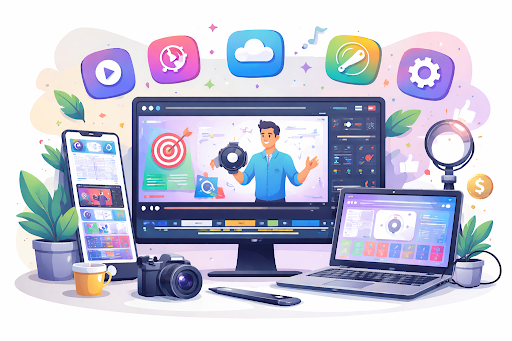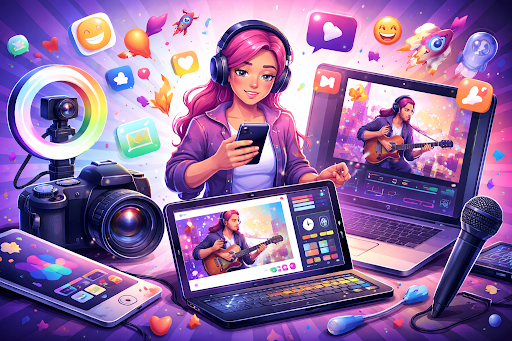
In the rapidly evolving digital landscape, the success of a musician is no longer determined solely by their ability to hit the right notes. Today, high-impact visual storytelling is the bridge between a catchy melody and a global viral sensation. With audiences consuming hours of short-form content daily, artists must leverage cutting-edge technology to maintain a consistent and captivating presence. From AI-driven generators to interactive social hubs, the right tools can transform a simple demo into a cinematic experience that resonates across timelines.
Whether you are looking to create high-octane teasers or full-length aesthetic masterpieces, choosing the right platform is essential for scaling your reach. Here are six platforms musicians use to create viral visual content.
1. Invideo
Invideo has established itself as a cornerstone for creators who need to produce professional-grade visuals without the steep learning curve of traditional editing suites. This platform utilizes advanced artificial intelligence to handle the heavy lifting, allowing artists to focus on their creative vision. By using a music video maker, musicians can generate music videos in minutes with simple text prompts, making it possible to keep up with the fast-paced demands of social media algorithms. The system intelligently selects relevant stock footage, applies transitions, and syncs visuals to the mood of the audio, ensuring that every project feels tailor-made for the artist’s specific genre and style.
What sets invideo apart for artists is not just the desktop experience but also the availability of an easy-to-use video ai app that supports on-the-go creativity. Musicians can draft visual snippets during tours, brainstorms, or studio sessions, turning spontaneous moments into polished social content. The platform’s AI-driven features help with things like automatic caption generation, template suggestions based on theme, and smart asset recommendations that keep visuals consistent with a musician’s brand identity. With collaborative editing and cloud storage, invideo ensures that teams — even when remote — can co-create and iterate with speed and efficiency.
2. Canva
Canva has transformed from a simple graphic design tool into a comprehensive visual engine that musicians rely on for total brand consistency. Its video suite is particularly popular for creating “lyric videos” and “motion art” that can be used across multiple platforms. With an extensive library of templates specifically designed for the music industry, artists can quickly produce everything from tour announcement posters to animated album covers. The platform’s user-friendly drag-and-drop interface allows even those with zero design experience to create professional-looking content that feels high-end and polished.
For musicians looking to go viral, Canva’s integration with popular social media formats is a significant advantage. The tool allows for easy resizing, meaning a single piece of content can be optimized for various aspect ratios in seconds. Its Magic Media features also enable users to generate unique AI imagery and short video loops that serve as perfect backgrounds for Spotify Canvas or Apple Music Motion Art. By providing a centralized hub for all visual assets, it helps independent artists maintain a professional aesthetic that is crucial for building a recognizable and trustworthy brand identity.
3. CapCut
CapCut has become almost synonymous with viral trends, particularly within the world of short-form vertical video. Owned by the same parent company as some of the world’s largest social platforms, it offers unparalleled integration with trending sounds and visual effects. Musicians use this tool to create high-energy “behind-the-scenes” clips, transition-heavy performance montages, and challenge-based content. Its automated “AutoCut” feature is a favorite for artists who want to sync their footage to the beat of their latest track with just a single click, ensuring a rhythmic flow that keeps viewers engaged.
The platform’s strength lies in its vast array of filters, stickers, and AI-powered effects that are constantly updated to reflect current internet culture. Features like background removal, 3D zoom, and body tracking allow musicians to create complex visual effects that previously required expensive software and hours of manual masking. Because the interface is so intuitive, artists can experiment with different editing styles on the fly, making it the ideal laboratory for testing what type of content might trigger the next viral wave. For any musician serious about dominating short-form feeds, this tool is an absolute necessity.
4. Adobe Express
Adobe Express brings the power of professional-grade creative tools into a streamlined, accessible format that is perfect for musicians on the move. It serves as a bridge between the simplicity of basic mobile editors and the deep functionality of the Creative Cloud. Artists often use it to create high-fidelity social media content that requires a bit more nuance and control over typography and color grading. The platform’s “Firefly” generative AI tools allow musicians to expand images, generate extraordinary textures, and even create unique text effects that make their promotional materials stand out in a crowded digital landscape.
One of the standout features for musicians is the ability to work with layers and professional fonts, which is essential for creating high-impact tour flyers and single release artwork. Adobe Express also offers a “Schedule” feature, allowing artists to plan their visual rollout weeks in advance across all major platforms. This strategic approach to content distribution ensures that the visual identity of a release is coherent and reaches the maximum number of people. By providing a sophisticated yet fast workflow, it empowers musicians to produce “viral-ready” content that maintains a high level of artistic integrity and professional polish.
5. Triller
Triller distinguishes itself not just as an editing tool, but as a social platform built specifically for the music community. It is designed to make music discovery interactive and visually driven, offering an “AI-powered” auto-editing feature that is specifically tuned to the rhythm of a song. Musicians use it to launch “challenges” and encourage fans to create their own versions of a music video. This user-generated content (UGC) is a powerful driver for virality, as it turns the audience into active participants in the song’s promotion, significantly expanding the artist’s reach through organic sharing.
The platform’s “social-first” approach means that the content created within the app is inherently optimized for engagement. Musicians can choose a snippet of their song and then record several takes of themselves performing or acting; the AI then pieces these clips together into a fast-paced, professional-looking music video. This low-friction creation process is perfect for artists who want to maintain a high volume of output without getting bogged down in technical details. By fostering a direct connection between the music and the visual movement of the audience, it creates a unique ecosystem where songs have a higher chance of becoming cultural moments.
6. Pexels & Pixabay (Visual Sourcing)
While not “editors” in the traditional sense, platforms like Pexels and Pixabay are vital resources that musicians use to fuel their visual content. Viral videos often require high-quality “B-roll” or atmospheric footage to fill gaps in a music video or to provide a specific mood for a lyric clip. These platforms offer massive libraries of royalty-free, high-definition videos and images that artists can use without worrying about copyright strikes. Whether an artist needs a cinematic shot of a sunset, a bustling city street, or abstract liquid textures, these sites provide the raw materials needed to build a visual narrative.
The use of high-quality stock footage is a “secret weapon” for many independent artists working on a budget. By combining these free cinematic assets with their own performance footage in a tool like invideo or CapCut, musicians can create content that looks like it cost thousands of dollars to produce. This ability to source professional visuals for free allows artists to keep their content diverse and visually interesting, preventing “audience fatigue” that often comes from repetitive, low-quality selfie videos. In the world of viral content, where the first three seconds of a video are the most critical, having access to stunning, high-definition B-roll is a game-changer.
Leveraging AI for Creative Freedom
The integration of AI into the musician’s toolkit has leveled the playing field, allowing independent artists to compete with major label budgets. Automation doesn’t replace the artist’s soul; rather, it removes the technical barriers that often stifle creativity. By using these platforms, musicians can experiment with different visual languages—from glitchy lo-fi aesthetics to clean, high-fashion promos—finding exactly what resonates with their unique fanbase.
Conclusion
Creating viral visual content is no longer a luxury for musicians; it is a fundamental part of the modern music industry. By mastering platforms like invideo, Canva, and CapCut, artists can ensure their music is seen as much as it is heard. These tools offer a spectrum of capabilities, from quick mobile edits to complex, AI-generated narratives, providing the flexibility needed to stay relevant in an ever-changing digital world. As technology continues to evolve, the musicians who embrace these visual platforms will be the ones who lead the charts and define the culture of tomorrow.