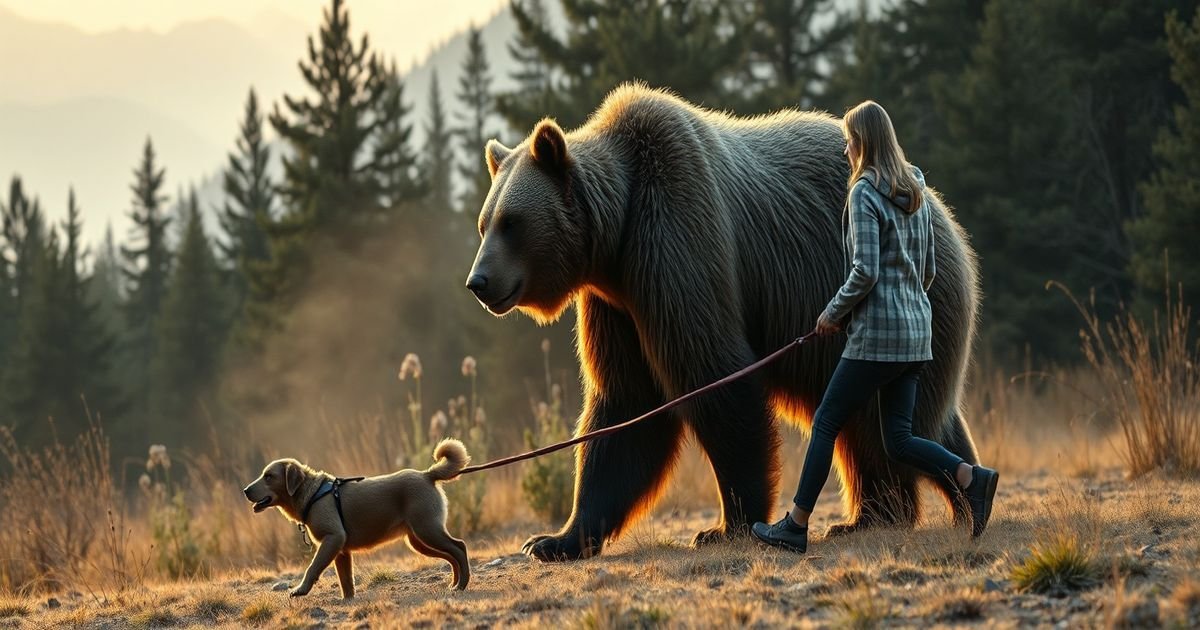
Encountering a grizzly bear while walking your dog is a high-stakes scenario demanding immediate, informed action. These grizzly bear dog walker encounter situations occur primarily in North American wilderness areas like Yellowstone, Glacier National Park, and Canadian Rockies trails. With grizzly populations rebounding in some regions, understanding how to respond is non-negotiable for pet owners venturing into bear habitat. This guide delivers actionable protocols based on wildlife agency recommendations, emphasizing that your dog’s behavior often dictates the encounter’s outcome. Ignoring these guidelines risks severe injury or fatalities for both humans and animals.
What Constitutes a Grizzly Bear Dog Walker Encounter?
A grizzly bear dog walker encounter happens when a person walking a leashed or unleashed dog crosses paths with a grizzly bear (Ursus arctos horribilis) in its natural environment. Unlike black bears, grizzlies are more territorial and likely to perceive dogs as threats or competitors. Key triggers include surprising a bear at close range (under 30 feet), encountering a sow with cubs, or having a dog chase or bark at the bear. According to Wikipedia, grizzlies can sprint up to 35 mph—faster than any human or dog. These encounters escalate rapidly because bears interpret running dogs as prey, triggering instinctive pursuit. Understanding this dynamic is the first step toward prevention.
Why Dog Walkers Face Heightened Risk
Several factors make dog walkers particularly vulnerable. Dogs’ natural curiosity often leads them to investigate bear scat, carcasses, or dens, triggering defensive aggression. Unleashed dogs may chase bears, provoking attacks that then endanger their owners. Additionally, grizzlies associate dogs with human hunters, increasing their defensiveness. Research shows encounters peak during dawn/dusk and in berry season (late summer), when bears are actively foraging. A study by the National Park Service noted that 70% of bear-related injuries to humans involved dogs off-leash. This underscores why managing your pet’s behavior is as crucial as your own actions during a grizzly bear dog walker encounter.
Critical Safety Protocols for Prevention
Proactive measures drastically reduce encounter risks. Always carry EPA-approved bear spray (not pepper spray) and keep it accessible—not buried in your backpack. Equip your dog with a bright vest for visibility and a sturdy leash (6-foot maximum). Avoid high-risk zones like carcass sites or dense brush where visibility is poor. When hiking:
- Make noise consistently by talking or clapping to avoid surprising bears
- Stay on marked trails and avoid dawn/dusk walks in prime bear habitat
- Never let your dog chase wildlife or investigate bear signs
For comprehensive trail safety resources, explore our resources on wilderness preparedness. Remember, prevention is 90% of defense in bear country.
Immediate Actions During an Encounter
If you spot a grizzly while walking your dog, act swiftly but calmly:
- Stop immediately and assess the bear’s behavior. Is it aware of you? Is it feeding or with cubs?
- Leash your dog if unleashed, speaking firmly to keep it close. Do NOT let it run toward or away from the bear.
- Back away slowly while facing the bear. Never turn your back or run.
- Deploy bear spray if the bear charges within 30 feet—aim slightly downward to create a cloud.
- Play dead if contact occurs: lie flat, cover your neck, and stay still until the bear leaves.
Contrary to popular belief, climbing trees is ineffective against grizzlies, which can climb swiftly. Your priority is de-escalation, not confrontation.
Real-World Lessons from Past Incidents
Documented cases highlight critical patterns. In 2023, a Montana hiker survived a grizzly attack by using bear spray after her unleashed dog provoked the bear—a scenario echoing 60% of recorded grizzly bear dog walker encounter incidents. Conversely, a 2022 case in Banff National Park resulted in severe injuries when an owner tried to shield their dog from a charging bear. Wildlife agencies like the Centers for Disease Control stress that intervening physically between a bear and dog often worsens outcomes. These examples prove that disciplined adherence to protocols saves lives.
Long-Term Preparedness Strategies
Beyond immediate responses, build lasting safety habits:
- Train your dog to respond to “leave it” commands and heel reliably
- Carry satellite communicators like Garmin inReach in remote areas
- Check park alerts daily for bear activity reports before hiking
- Join wildlife safety workshops offered by parks or conservation groups
Consistent practice transforms these steps into instinctive reactions. For tailored advice on pet-safe wilderness gear, learn more on our site. Remember, respecting bear habitat isn’t just ethical—it’s essential for coexistence.
Conclusion: Respect, Not Fear
A grizzly bear dog walker encounter demands respect for the bear’s power and space, not panic. By prioritizing prevention, mastering emergency protocols, and understanding bear behavior, you transform高风险 scenarios into manageable ones. Always prioritize your safety over your pet’s—attempting heroic rescues often leads to dual tragedies. As grizzly habitats expand near human recreation areas, these skills become indispensable. Equip yourself with knowledge, carry bear spray, and walk confidently knowing you’ve prepared for the unexpected. Your vigilance protects not just your dog, but the fragile balance between wilderness and community.